
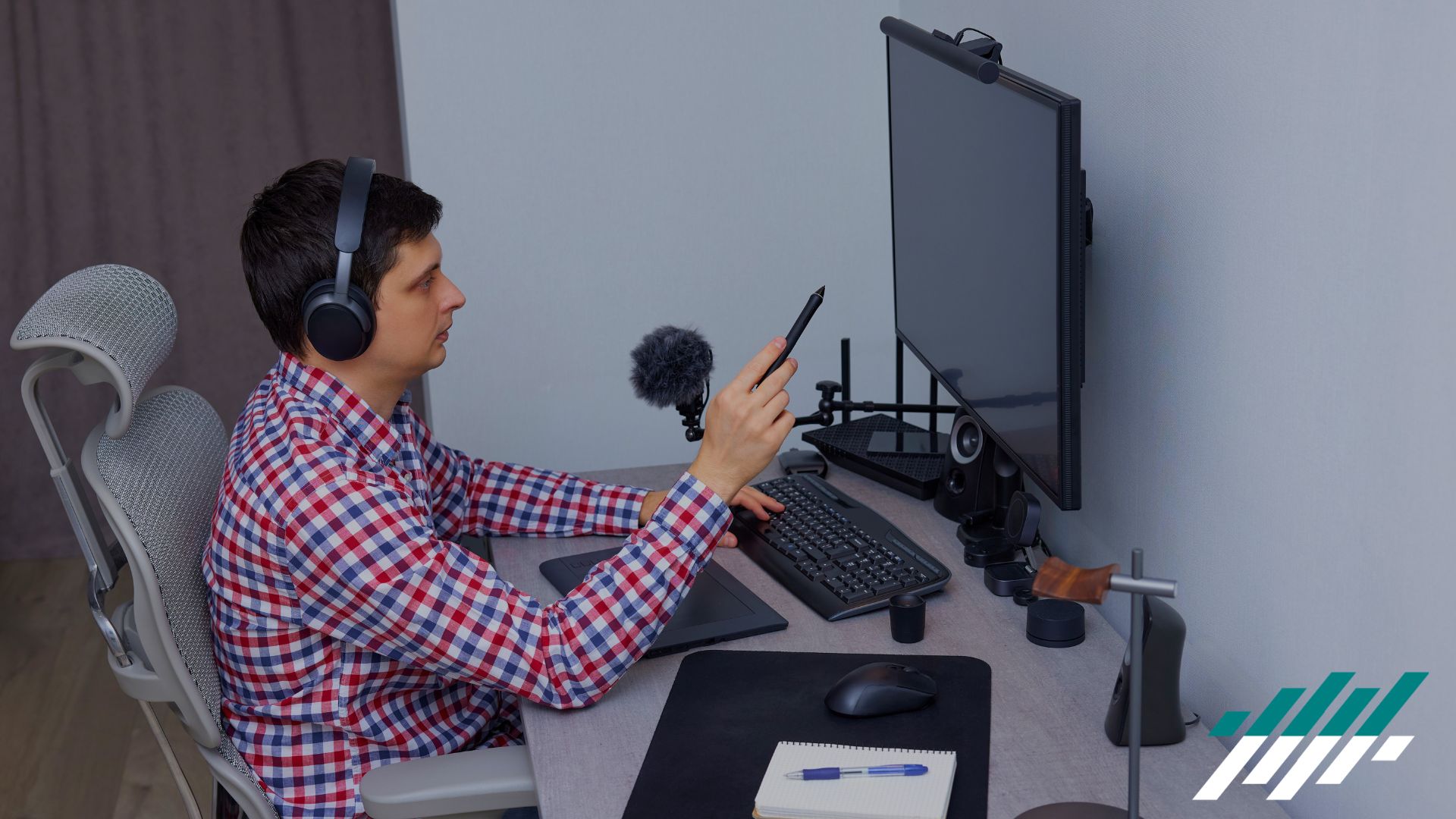
Although many have returned to the office since the pandemic, working from home remains common in our modern professional world. This begs the question: how do you maintain an ISO 45001 certified system when your staff are working from home? As a health & safety manager, how much responsibility do you have here, and what would an auditor look for?
To answer this, it is important to note that under ISO 45001, the “workplace” is defined as any location where a person needs to be for work purposes under the ‘scope’ of the organization’s activities.
As an employer, you have limited control over how somebody designs and lives within their home. However, you are responsible for the “work-related” aspects of their home environment. This means your duty of care extends to the equipment you provide, the ergonomic setup of their station, and their mental health while they are on the clock.
Display Screen Equipment (DSE) Rules
For instance, Display Screen Equipment (DSE) requirements must be met with the same rigor as they are in a traditional office. Under current safety regulations, if an employee is categorized as a “DSE user” (meaning they use a laptop or computer for a significant part of their daily work) the organization has a responsibility to ensure their workstation is ergonomically sound.
Don’t just provide them with a laptop. To meet ISO 45001’s requirements and minimize physical risk, you may need to supply external monitors, adjustable chairs, keyboards, and mice to prevent long-term musculoskeletal issues. An auditor may look for evidence that you have not only conducted DSE assessments for home-workers but that you have a documented process for identifying equipment gaps and a clear record of providing the necessary hardware to bridge those gaps.
Consultation and Participation Remains Key
The key clause around “Consultation and Participation” (Clause 5.4) is particularly relevant here. Since you cannot physically walk the floor, your primary responsibility is to empower the employee to be their own safety officer. This is made possible through thorough employee consultation and participation.
If, in their home environment, they have trip hazards all over the place, constantly leave the iron on, regularly run with their kitchen scissors and never get their smoke alarm batteries replaced, there’s nothing much you can do directly. BUT! You are responsible for instilling something of a safety culture, ensuring that the employee knows what a “safe” setup looks like and that they have a clear communication channel to report issues, be it a certain monitor is causing eye strain or a lack of social contact is causing feelings of isolation.
What Does an Auditor Look For?
What may an auditor look for, in this regard? They will examine your Hazard Identification and Risk Assessment (HIRA) to see if you have formally recognized home-working risks. An auditor will specifically look for evidence of completed home-office checklists, records of ergonomic equipment being dispatched, and proof that remote workers are still included in safety briefings. They want to see that the “Home Office” isn’t a dark spot in your management system, but a fully integrated part of your safety culture.
Furthermore, an auditor will pay close attention to psychosocial risks, looking for evidence that you are managing the risk of digital burnout. To mitigate this, a “Right to Disconnect” policy is useful, as is reviewing how you monitor the mental health of staff who may go days without face-to-face interaction.
This means that you can demonstrate to the auditor that your ISO 45001 system isn’t just a checklist for your physical site, but a broader framework that protects your staff, whether they are working on-site in the hi-vis, or at home in their slippers.